Investing
How to Calculate ARV (After Repair Value): A Flipper's 2026 Playbook
This guide shows investors and flippers how to estimate ARV from comps, budget the renovation and set a maximum offer with the 70% rule.
·11 min read
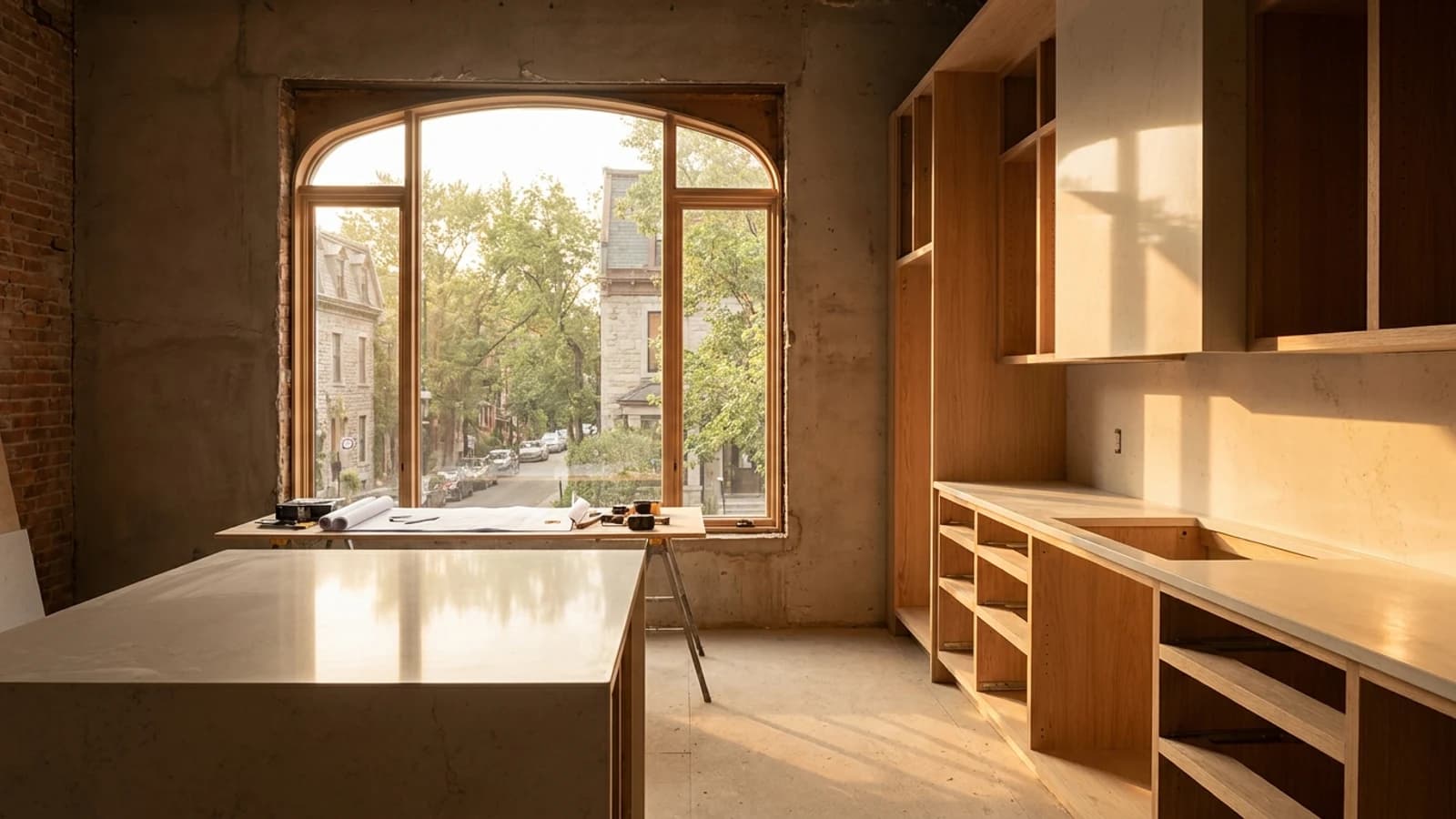
How AI now handles the full home renovation stack — design, sourcing, permits, contractors, delivery. Real costs, real timelines, and what to do this weekend.
AI home renovation in 2026 is not about the render — it's about the renovation. Permits, vendors, contractors, deliveries, the actual finishing of the actual project. This is the field guide to closing the gap between the design and the done.
The category has expanded fast. A few years ago it mostly meant AI interior design — upload a photo, get a render. That's a sliver of the work. In 2026, the leading platforms cover the full stack:
Compozit packages this as four lenses: Vision · Lens · Check · Flow. Vision is live today.
Here is what a real platform conversation looks like:
You: I want to renovate my kitchen. Plateau triplex, top floor.
Vision: I have your floor plan. Want a Scandinavian look under 25k all-in?
You: Yes. Keep the existing windows.
Vision: Done. 38 pieces sourced — 21 from local Quebec suppliers. Bill of materials: $18,400. Labor estimate: 4–5k. Heads up — the wall between the kitchen and dining is load-bearing.
Check: Plateau-Mont-Royal requires a permit for that wall removal plus a structural engineer's letter. About 4 weeks.
Flow: I can pull three contractor quotes by Friday. Want me to run it?
Furniture, fixtures, finishes — tied to live SKUs at real retailers. In Quebec, Compozit Vision pulls from EQ3, Structube, Tanguay, IKEA, Linen Chest, and a long tail of local suppliers. Prices are within ±5% of what you actually pay.
Not "around $25k." A line-item breakdown by room, by material, by trade. The estimate's job is to be wrong by less than 10% — and on furniture and fixtures, it usually beats that.
AI that knows your local code (Compozit Check handles Quebec / Montreal natively) catches what your designer would miss: heritage rules, zoning, structural risk, electrical limits.
A homeowner doesn't have leverage. An agent that runs hundreds of similar projects across hundreds of vendors does. Consistent 8–15% savings versus retail.
| Project | Without AI | With AI agent |
|---|---|---|
| Single-room refresh | 6–10 weeks | 3–5 weeks |
| Kitchen renovation | 4–6 months | 2–3 months |
| Full top-floor reno | 8–12 months | 4–6 months |
| Whole-home gut | 12–18 months | 8–10 months |
| Cost line | Traditional | AI-managed |
|---|---|---|
| Design / planning | $3,000–10,000 | included |
| Sourcing markup | 10–20% | ~0% |
| Permit consultant | $500–2,000 | included |
| Contractor coordination | your weekends | agent-managed |
| Time-to-finish | baseline | 30–40% faster |
Phase 0 — Conversation and scoping You talk through the project. The agent listens, gathers context, and writes the project brief. Output: scope, budget, timeline, must-haves, deal-breakers.
Phase 1 — Design and pricing Vision generates 2–4 design directions, sources real products, and returns the bill of materials. You iterate by talking. Output: approved BOM with line-item costs.
Phase 2 — Permits and structural review Check reads the design and property data, flags every regulatory issue, and pulls the permit application checklist for your borough. Output: permit-ready packet.
Phase 3 — Sourcing and vendor negotiation Flow places orders with vetted vendors, negotiates pricing, and books delivery slots. You approve every purchase order. Output: sourced materials with confirmed delivery dates.
Phase 4 — Contractor coordination Flow shortlists 2–3 contractors, gets bids, schedules pre-construction walkthroughs. You pick. Output: signed contract, mobilization date.
Phase 5 — Build and inspection Flow tracks the schedule, holds vendors accountable, coordinates inspections, and surfaces issues in real time. Output: finished project, signed-off inspections.
Will AI renovate my house autonomously? No, and you don't want it to. The agent handles 80% of the project management work. You stay in the loop on every meaningful decision and every spend.
Is this just for new construction? No — most projects are renovations of existing homes. Plateau triplexes, NDG bungalows, Westmount duplexes. The agent is built for the messy reality of renovation.
Does it work outside Quebec? Vision and sourcing work anywhere products ship. Check (permits) is fully built out for Quebec / Montreal first; other markets follow as we expand.
What about contractors I already know? Bring them. The agent works with your existing trades. You don't have to use our shortlist.
Does the agent file the permit for me? The agent prepares the application packet and runs the borough lookup. You file. Permits are legal documents tied to your name.

Compozit
Virtual staging, renovation previews, and listing-ready photos for real estate pros — in under 30 seconds.
Start FreeKeep Reading
This guide shows investors and flippers how to estimate ARV from comps, budget the renovation and set a maximum offer with the 70% rule.
What AI photo editing can fix in listing photos, where the MLS line sits, and a workflow agents can run on every listing without misleading buyers.
An honest 2026 comparison of virtual staging and physical staging for real-estate agents and sellers — real cost ranges, turnaround time, buyer perception,